


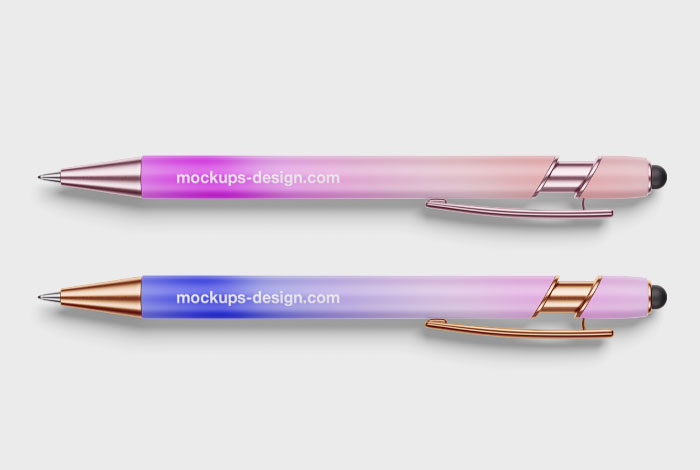


Pen mockups
Pen mockups for promotional and branded pens — plastic and metal ballpoints, clicks and caps, printed or engraved.
BarrelsPlastic, metal
MarkingPrint or engraving
LayoutSingle or in rows
FilesLayered PSD, smart objects
A pen is the tightest brief you'll get: a thin cylinder a few millimetres tall along the print area, wrapping away from the viewer on both sides. There's room for a name and maybe a short line, and that's genuinely it — a logo drops to a simple lockup, a URL runs the length of the barrel, and anything more turns to mush at print size. Because it's round, only a sliver faces the camera at once, so the artwork has to survive being read on a curve and mostly in profile, which is why the workable ones keep to one colour and a clean horizontal lockup.
The barrel decides the method, and the method decides the look. A plastic pen takes a printed or pad-printed graphic, so colour is easy but it sits on the surface; a metal pen is usually laser-engraved, biting into the finish for a subtler, premium mark that reads by contrast rather than colour. These are the classic giveaway and corporate gift — conferences, hotels, banks, trade stands — and they're shown clean and straight down, single for a close look at the mark or lined up in a row to present a colour range. Trying your lockup on the actual barrel is the fastest way to catch type that's fine on screen and unreadable at 4 mm.
In the sets: the pen shown straight down on a clean surface, single and in rows, close enough to read the mark, so you can present it on its own or in a set. Each is a layered PSD with smart objects — the artwork sits on its own layer, so replacing it leaves the barrel, finish, lighting and shadow untouched.